
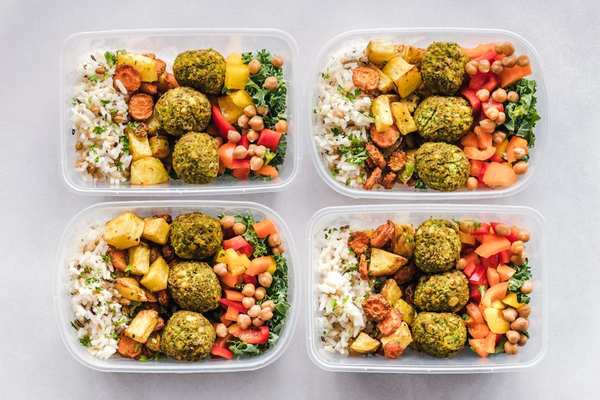
Plant-based meal prep works best when you stop trying to cook five completely different recipes at once. The easier approach is to prepare a few flexible building blocks—grains, beans, roasted vegetables, sauces and fresh toppings—then combine them in different ways across the week. That keeps the food varied without turning Sunday afternoon into a marathon cooking session.
A good plant based meal prep for the week should also respect food safety. Most cooked leftovers are best used within three to four days in the refrigerator, so meals for later in the week are better frozen after cooling and thawed when needed. This gives you a full week’s plan without relying on food kept refrigerated too long.
Build Your Week Around Four Core Components
Start by choosing one grain, one or two protein-rich plant foods, two vegetables and one versatile sauce. For example, cook brown rice or quinoa, prepare lentils and chickpeas, roast a tray of peppers, courgettes and broccoli, then make a tahini-lemon or tomato-based sauce.
This style of vegan meal prep is more flexible than portioning the same finished dish into five containers. The same rice can become a burrito bowl one day and a curry base the next. Chickpeas can go into a salad, wrap or stew. Roasted vegetables can be served hot, cold or blended into a sauce.
Step One: Cook Grains in a Large Batch
Wholegrains and starchy bases make plant based meal planning much easier because they turn vegetables and pulses into complete meals quickly. Brown rice, quinoa, bulgur, wholewheat couscous and barley all work well for batch cooking.
Cook enough for several meals, cool it promptly and divide it into portions. Keep only what you expect to eat within the next few days in the refrigerator and freeze the rest. Flat freezer bags or shallow containers make portions easier to stack and quicker to defrost.
Step Two: Prepare Two Plant Proteins
Beans, lentils, chickpeas, tofu and tempeh are useful meal-prep staples because they can be seasoned in different ways. If you want minimal cooking, use canned beans or chickpeas, rinse them well and season them just before serving. For more variety, cook one lentil dish and bake or pan-cook tofu for a second option.
Keeping two protein choices ready prevents the week from feeling repetitive. A smoky chickpea mix can work in wraps and bowls, while herby lentils can go into salads, stuffed potatoes or pasta.
Step Three: Roast Vegetables Once, Use Them Three Ways
A large tray of vegetables is one of the highest-value tasks in batch cooking vegan meals. Peppers, onions, courgettes, cauliflower, broccoli, carrots and sweet potatoes all reheat well and can be repurposed easily.
Roast them fairly simply with oil, pepper and herbs rather than using a very strong sauce. Neutral seasoning gives you more options later. You can add curry paste, salsa, pesto-style herbs or tahini when assembling each meal.
Five Easy Meals From One Prep Session
1. Chickpea Grain Bowl
Layer brown rice or quinoa with roasted vegetables and chickpeas, then add a lemon-tahini dressing. Keep the dressing separate until eating so the meal stays fresher. Add spinach, cucumber or herbs on the day for contrast.
2. Lentil and Vegetable Wrap
Spread hummus over a wholemeal wrap, add cooked lentils, roasted peppers and greens, then roll tightly. This travels well and needs little reheating.
3. Quick Bean Burrito Bowl
Combine rice, black beans, roasted vegetables, sweetcorn and salsa. Add avocado just before serving rather than during the initial prep. A squeeze of lime keeps it tasting fresh.
4. Coconut Lentil Curry
Use pre-cooked lentils as the base for a fast curry with tomatoes, coconut milk and spices. Serve with your batch-cooked grain. If this is planned for later in the week, freeze the curry in an individual portion soon after cooking and reheat it thoroughly when needed.
5. Roasted Vegetable Pasta
Mix wholewheat pasta with roasted vegetables, chickpeas and a tomato or herb-based sauce. This works hot for dinner or chilled as a pasta salad. Keep leafy greens separate until serving so they do not wilt during storage.
Prep Fresh Ingredients Separately
Not everything should be cooked or mixed on prep day. Cucumber, herbs, salad leaves, avocado and some sauces are better kept separate. This small distinction is what makes prepped meals feel fresher on Thursday than they would if every ingredient had been sealed together since Sunday.
A practical system is to prepare “base boxes” with grains, beans and roasted vegetables, then keep fresh toppings in small containers. Assembly takes two minutes, but the texture and flavour are noticeably better.
Plan for Three Fridge Days and Freeze the Rest
For a full seven-day schedule, do not assume every cooked meal should stay refrigerated all week. Current USDA guidance recommends using cooked leftovers within three to four days. Refrigerate early-week meals and freeze portions intended for later in the week. Cool cooked food promptly, use shallow containers where practical and label frozen portions with the date.
This also improves plant based meal planning because freezer portions act as insurance. If plans change and you eat out on Wednesday, your Friday dinner is not suddenly at the end of its safe refrigerator window.
Make One Sauce That Changes the Whole Week
A versatile sauce can stop meal prep from tasting repetitive. Tahini and lemon, peanut and lime, tomato and herb, or a simple curry sauce can all work across grains, beans and vegetables. Prepare one main sauce, then change the finishing touches with chilli flakes, herbs, citrus or spices.
For more ideas, useful related topics include easy vegan protein sources, healthy wholegrain meal ideas and beginner-friendly plant-based shopping lists.
Frequently Asked Questions
How long does plant-based meal prep last in the fridge?
Many cooked leftovers should be eaten within three to four days when properly refrigerated. For meals planned later in the week, freezing is the safer and more practical option.
What should I meal prep first?
Start with the components that take longest: grains, lentils or beans, roasted vegetables and any cooked sauces. Leave delicate greens, avocado and fresh garnishes until closer to serving.
How do I keep vegan meal prep from becoming repetitive?
Use neutral base ingredients and change the final flavour. The same rice, chickpeas and roasted vegetables can become a burrito bowl, curry, wrap or grain bowl depending on the sauce and toppings.
Do I need special containers for meal prep?
No. Any clean, food-safe, well-sealed containers can work. Shallow containers help cooked food cool more quickly, while freezer-safe portions are useful for meals you will not eat within a few days.
A Week of Meals Without a Week of Cooking
The best plant-based prep routine is not about filling the fridge with seven identical boxes. It is about doing the slow work once, then giving yourself flexible ingredients for fast meals. Batch-cook a grain, prepare two plant proteins, roast vegetables, make a sauce and freeze the later-week portions. With those basics ready, five different vegan lunches and dinners can come together quickly, while still giving you enough variety to enjoy the plan all week.