
Why Flexibility Is More Than Touching Your Toes
Flexibility is often misunderstood. Many people think it simply means being able to fold forward, sit in a deep split, or move like someone who has been stretching since childhood. In real life, flexibility is much more practical than that. It is the ease of reaching for something on a high shelf, bending without stiffness, walking with a smoother stride, or getting up from the floor without feeling awkward.
This is where Pilates for flexibility becomes so useful. Pilates does not treat the body like a collection of separate muscles that need to be pulled longer. It looks at movement as a whole. The spine, hips, shoulders, breath, core, and posture all work together. When one area is tight or weak, another area often compensates. Pilates helps untangle those patterns gently, which is why it can improve flexibility in a way that feels steady and natural.
How Pilates Helps the Body Open Up
Pilates improves flexibility through controlled movement rather than force. Instead of holding a stretch and waiting for discomfort to pass, many Pilates exercises move the body in and out of lengthened positions. This teaches muscles to release while staying active.
That active quality matters. A body that is flexible but unsupported can feel unstable. Pilates builds strength alongside mobility, so the body learns to move through a wider range with control. Over time, stiffness starts to soften because the muscles are no longer guarding so much.
The slow pace also gives you time to notice what is actually happening. Maybe the hamstrings are not the only tight area during a forward fold. Maybe the lower back is gripping. Maybe the shoulders rise when the breath becomes shallow. Pilates brings attention to these small details, and those details often explain why flexibility has felt difficult in the first place.
The Role of Breath in Better Mobility
Breath is one of the quiet strengths of Pilates. It may not look dramatic from the outside, but it changes the entire feeling of a movement. When the breath is held, the body usually tightens. When breathing becomes deeper and more controlled, the nervous system can relax, and the muscles often respond by letting go.
In Pilates, breath supports movement. An exhale can help deepen abdominal engagement during a roll-up. An inhale can create space through the ribs during a side bend. A steady breathing rhythm can make stretching feel less forced and more fluid.
For people who sit for long hours, this can be especially helpful. The chest, ribs, and upper back often become stiff from rounded posture and shallow breathing. Pilates encourages the rib cage to move again, which can improve posture and make the whole upper body feel lighter.
Why Core Strength Supports Flexibility
It may sound surprising, but a strong core can make the body feel more flexible. Tightness is not always caused by short muscles. Sometimes the body tightens because it does not feel supported. If the core is weak, the lower back, hip flexors, or neck may take over work they were not meant to do.
Pilates builds deep core strength through precise, controlled exercises. This gives the spine and pelvis better support. When the body feels stable, it is often more willing to move freely. A supported spine can bend and rotate more comfortably. Stable hips can allow the legs to move with less strain. Strong shoulder control can reduce neck tension and help the chest open.
This is why Pilates for flexibility is not just stretching with a different name. It is a method that combines strength, alignment, and mobility so flexibility becomes safer and more useful.
Pilates Movements That Encourage Flexibility
Some Pilates exercises are especially helpful for improving flexibility. The roll down is a simple but powerful movement. Standing tall, you slowly round the spine forward one section at a time, allowing the head, neck, shoulders, and back to release gradually. It stretches the back body while teaching the spine to move with control.
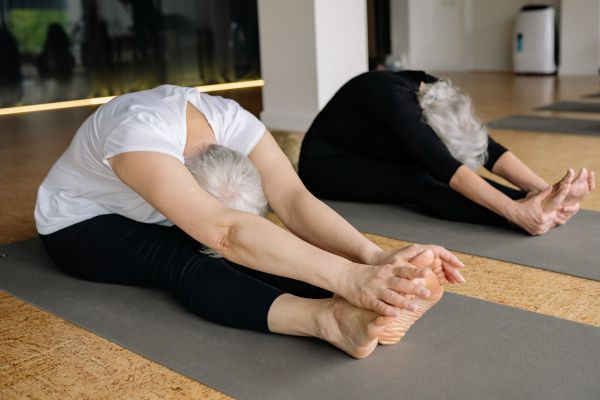
The spine stretch forward is another classic. Sitting with the legs extended, you reach forward through the spine without collapsing. It can open the hamstrings, lower back, and shoulders, while still asking the abdominal muscles to stay active.
The saw adds rotation, which many stretching routines forget. Twisting through the waist and reaching across the body helps improve spinal mobility and length through the sides. The mermaid stretch is also excellent for opening the ribs, waist, and hips. It feels especially good for people who spend most of the day sitting.
For the front of the body, swan prep can be helpful. This gentle back extension opens the chest and strengthens the upper back. Since modern posture often pulls the shoulders forward, this movement can feel refreshing when done carefully.
A Simple Pilates Flexibility Routine
A beginner-friendly Pilates routine does not need to be long. In fact, shorter sessions are often easier to repeat. Start by lying on your back with your knees bent and your feet flat. Take slow breaths, feeling the ribs expand and soften. This simple beginning helps the body settle before movement starts.
From there, move into pelvic curls. Slowly lift the hips, rolling the spine away from the mat, then lower down with control. This warms the spine and gently opens the front of the hips. After a few repetitions, bring one knee at a time toward the chest to release the lower back.
Next, sit tall for spine stretch forward. Keep the movement slow and avoid forcing the hands toward the feet. Let the breath guide the stretch. Follow with a gentle saw movement, rotating from the waist and reaching across the body.
Finish with a mermaid stretch on each side and a relaxed forward fold. The whole routine can take ten to fifteen minutes. Done regularly, it can make the body feel noticeably less stiff without leaving you drained.
Common Mistakes Beginners Should Avoid
One common mistake is trying to stretch too deeply too soon. Pilates is not about proving how far the body can go. The quality of movement matters more than the size of the stretch. If the body is shaking, gripping, or holding the breath, it is usually a sign to ease back.
Another mistake is moving too quickly. Fast movement can hide tension and reduce control. Pilates works best when you slow down enough to feel the path of the movement. This is where real change often begins.
Poor alignment can also limit progress. For example, rounding forward without engaging the core may strain the lower back instead of improving flexibility. Lifting the shoulders during arm movements can create neck tension. Paying attention to small corrections helps the body learn better habits.
How Often to Practice Pilates for Flexibility
Consistency is more important than intensity. Practicing Pilates three to five times a week, even for short sessions, can gradually improve mobility. A few mindful minutes every day may be more effective than one long session done occasionally.
Results vary from person to person. Some people feel better after the first session because their body releases tension quickly. Others need several weeks before they notice a clear difference. Lifestyle also matters. Long sitting hours, stress, poor sleep, and lack of movement can all contribute to stiffness.
The good news is that progress often appears in ordinary ways. You may notice that your back feels looser in the morning, your shoulders feel less tight, or your hips move more easily during walks. These small changes are meaningful because they show that flexibility is becoming part of daily movement, not just something that happens on a mat.
Making Pilates Part of Everyday Wellness
Pilates fits well into daily life because it does not always require equipment or a large space. A mat is helpful, but many movements can be done on the floor, beside a desk, or even standing. This makes it easier to stay consistent.
It can also balance other forms of exercise. Runners may use Pilates to open tight hips and hamstrings. Strength trainers may use it to improve mobility and posture. People who are new to fitness may use it as a gentle starting point before moving into more intense workouts.
The real value is awareness. Pilates teaches you to notice how your body moves, where it holds tension, and how breath can change the way movement feels. That awareness often carries into the rest of the day.
Conclusion
Pilates for flexibility offers a calm, intelligent way to move better. It does not force the body into extreme positions or treat stretching as a competition. Instead, it builds flexibility through breath, strength, control, and steady practice.
With time, Pilates can help the body feel less stiff and more coordinated. The changes may begin quietly, in small daily moments, but they matter. Reaching, bending, walking, sitting, and standing all become easier when the body has more space to move. In that sense, flexibility is not just about what you can do during a workout. It is about how comfortably you can live in your body.